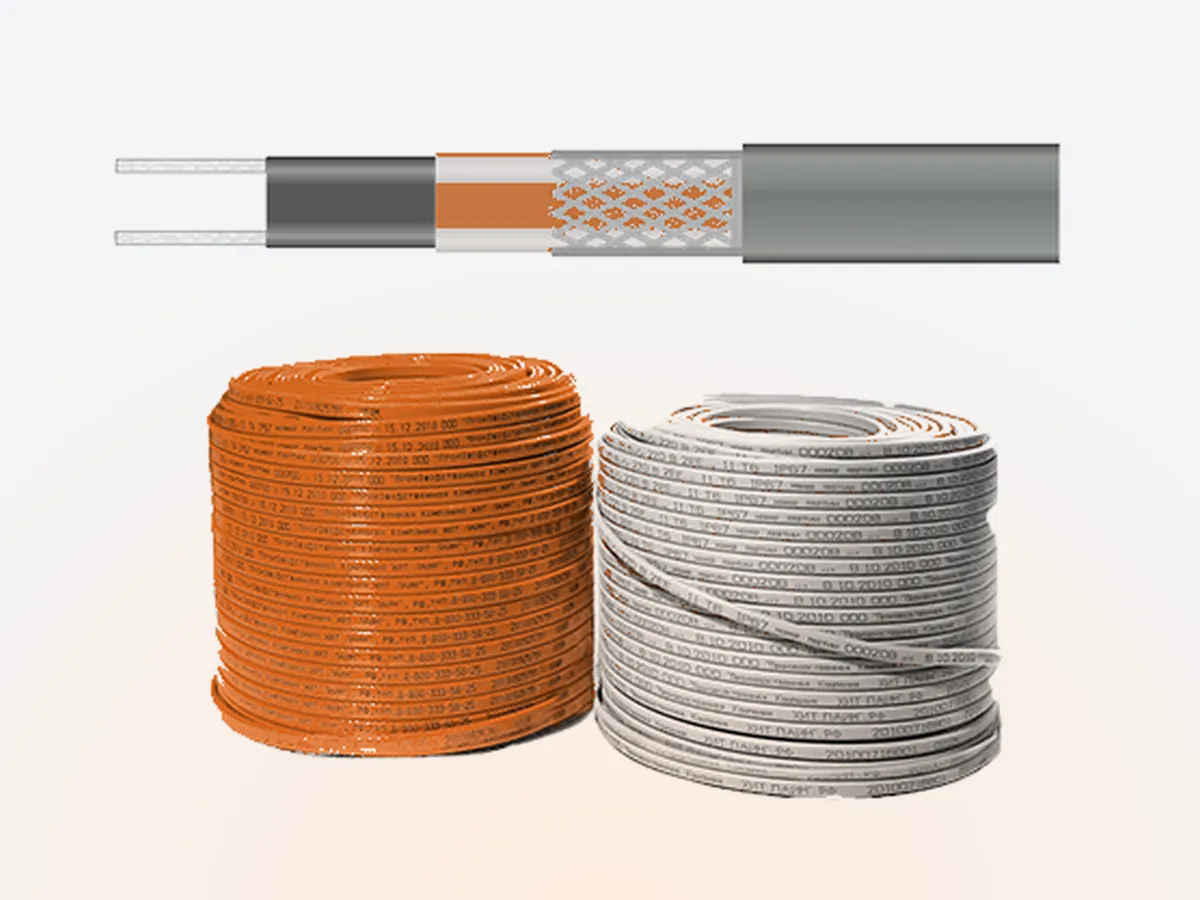
How a self-regulating cable works
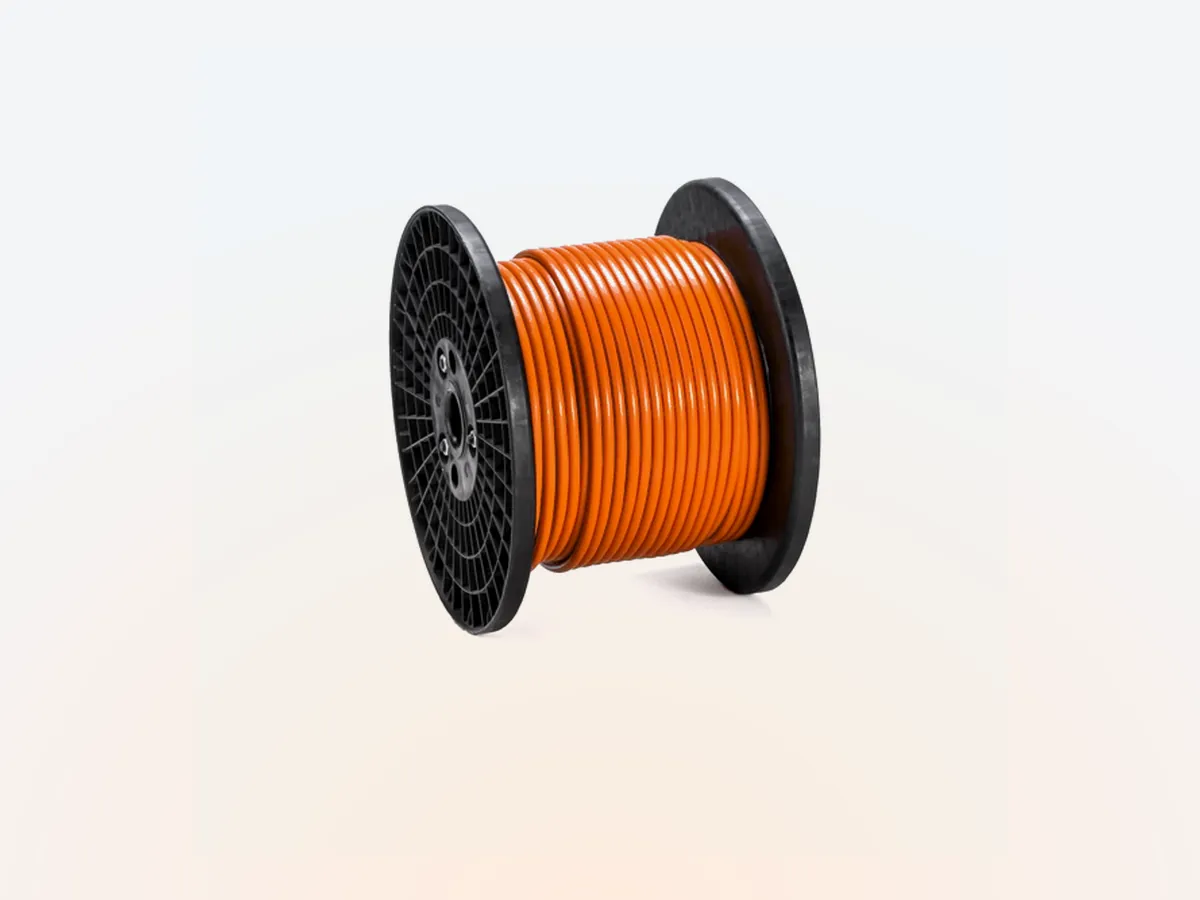
Between the cable's two conductors is a semiconductive core. When it is cold, the core conducts more current and the cable heats more; when it is warmer, the output drops by itself – locally, along every part of the cable. So the cable cannot overheat even where it crosses itself, and it controls its own power use.
Applications
- Water and drain pipes – protection from freezing and bursting, in basements, outdoors and at shallow depth
- Gutters and downpipes – meltwater drains instead of freezing
- Roofs – no icicles or ice build-up at the edge
- Ramps, driveways and stairs – no ice and no salt
- Tanks, pressure vessels and industrial pipelines – keeping liquids at temperature
- Greenhouses – soil heating to keep the temperature plants need
Frost protection for pipes
For pipes there are ready kits of about 17 W/m with a supply cable and a factory-fitted end seal. Benefits:
- pipes can be laid at a shallower depth
- water is ready straight away, without pre-heating
- no return line or circulation pump needed
- prevents condensation on the pipe surface
- even short sections from 20–30 cm can be heated
How we install it
- the cable or kit of the right length is laid along the pipe and fixed with aluminium tape
- every 30–40 cm it is additionally secured with glass-cloth tape or cable ties
- the pipe is covered with thermal insulation – thickness depends on cable output and pipe diameter
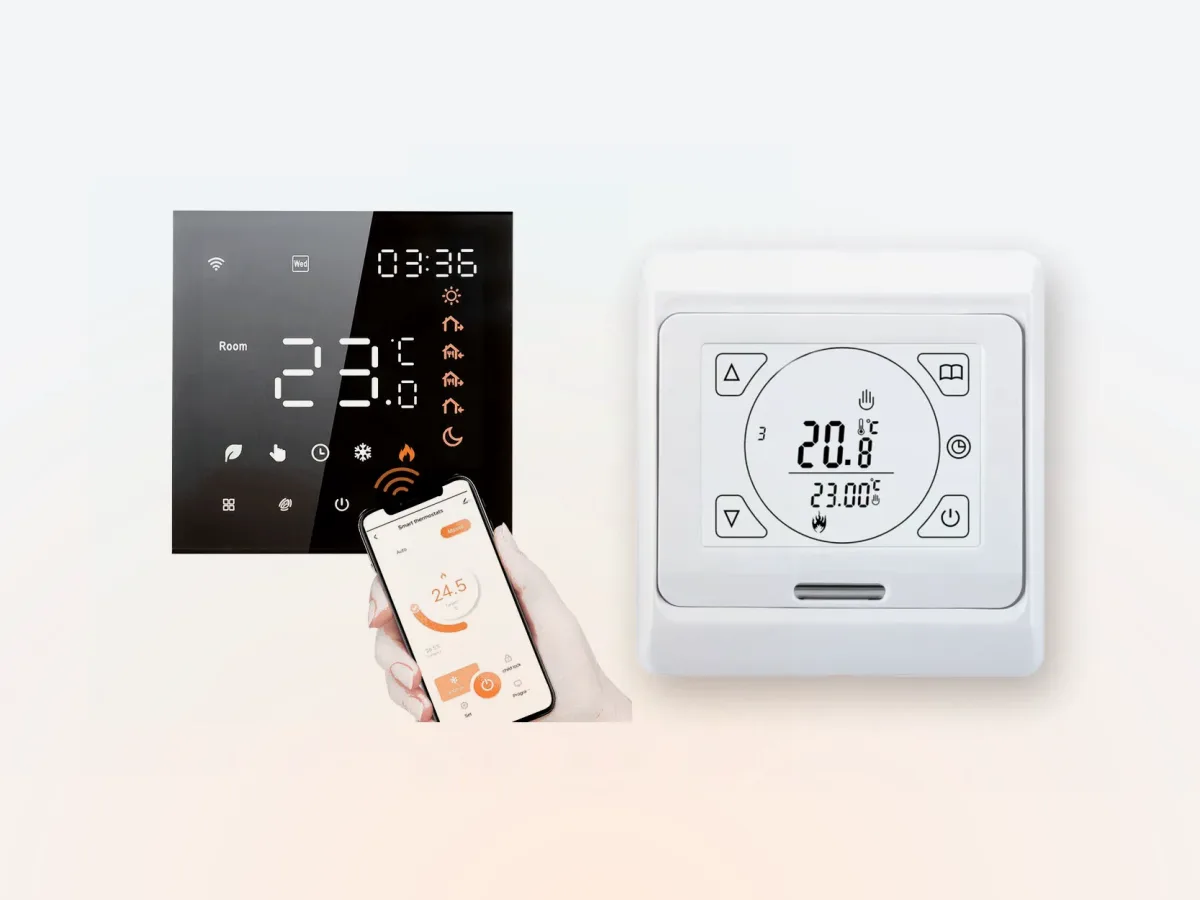
- where useful we add a thermostat for control and energy saving
The cable can also be installed inside a pipe with a special entry fitting. Gutters and ramps use a controller with temperature and moisture sensors. More in Gutter, roof and pipe heating, and for industry on the industrial heating page.